
The Human Side of Digital Transformation: Skills & Culture Shifts That Enable Change
By Sweety, VP – Human Resources, PureSoftware
Digital transformation is often described through technology, upgraded platforms, cloud migration, automation, and AI. Yet organizations consistently learn that the most complex part of transformation is not deploying systems. It is enabling people to think, work, and lead differently.
Technology can be implemented.
Transformation must be cultivated.
Real digital transformation succeeds only when culture, capability, and leadership evolve at the same pace as technology. At its core, digital transformation is a human transformation and that is where the real work begins.
When People Are an Afterthought, Transformation Slows Down
Many transformation programs stumble not because the technology fails, but because employees feel overwhelmed or disconnected from the process. McKinsey’s research stating that 70% of digital transformations fail due to people and culture challenges reflects exactly what we see in organizations every day.
Employees ask themselves:
- What does this change mean for me?
- Will I be able to adapt?
- Is this replacing my role?
- Will someone guide me or am I expected to navigate this alone?
These are real emotions. When leaders acknowledge them and communicate transparently, transformation becomes more humane and more successful. Employees join the journey when they see change as a shared mission, not a top-down instruction. Compliance creates movement; commitment creates momentum.
“Technology may be the enabler, but people are the true catalysts of digital transformation. When organizations invest in culture, coaching, and capability-building, change stops feeling like pressure and starts becoming progress.”
— Sweety, VP | HR, PureSoftware
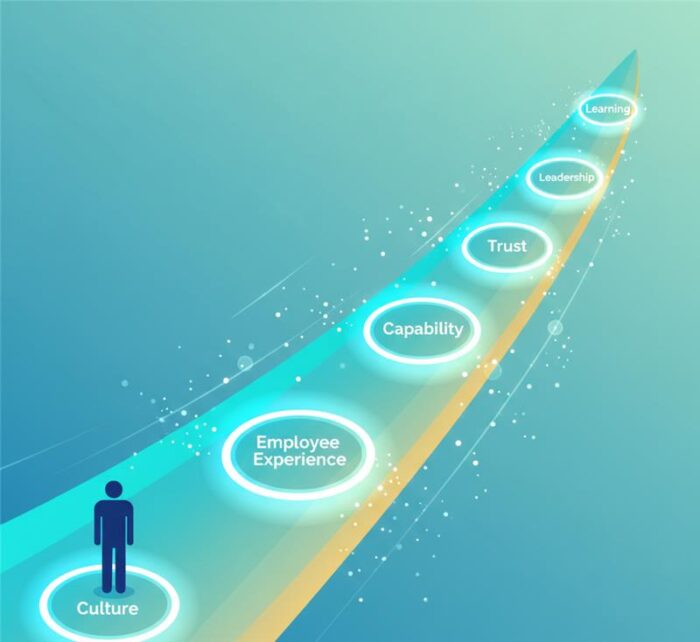
Culture: The Foundation That Determines the Pace of Change
Technology can modernize operations, but only culture can modernize mindsets. Organizations with strong cultural foundations adapt more quickly because of behaviors not tools.
A transformation-ready culture is one where:
- People feel safe experimenting, even if outcomes aren’t perfect.
- Teams work beyond functional boundaries.
- Leaders communicate transparently, especially when the path ahead is not linear; and
- Learning is seen as continuous, not episodic.
This culture doesn’t appear overnight. It is built steadily through conversations, leadership consistency, recognition of effort, and the everyday choices teams make in how they work and collaborate.
At PureSoftware, we emphasize these micro-behaviors because they are often more powerful than any large-scale initiative.
The Skills That Matter Most in a Digital-First World
As workplaces become digital-first, skills must evolve in two dimensions:
1. Digital Fluency
Data literacy, AI awareness, cloud fundamentals, automation tools, and digital product thinking help employees understand and apply new technologies.
2. Human Capability
Adaptability, creativity, problem-solving, empathy, communication, and influence enable employees to navigate uncertainty and collaborate effectively.
Most employees do not struggle with technology itself; they struggle with the uncertainty around it. When organizations invest in both digital and human capability, transformation becomes more meaningful, inclusive, and sustainable.
Employee Experience Is the Real Accelerator of Digital Transformation
We often talk about customer experience, but the real engine that powers digital transformation is employee experience (EX). When people feel valued, informed, and supported, they embrace change more naturally.
Teams adopt transformation faster when they have clarity on the “why,” see growth opportunities, and trust the leadership guiding them. When employees feel disconnected or unprepared, even the best tools face resistance.
A strong EX strengthens performance, accelerates adoption, and builds organizational resilience.
Leadership is The Backbone of Cultural and Digital Change
Transformation does not begin with strategy decks or technology rollout plans. It begins with leaders, how they communicate, how they show up in times of uncertainty, and how consistently they embody the behaviors they expect from others.
The most effective leaders I’ve worked with are those who:
- Communicate the why, not just the what
- Show empathy while delivering clarity
- Coach teams to build capability
- Demonstrate adaptability themselves
When leadership models the behaviors expected from others, employees feel confident stepping into new ways of working.
HR’s Role: Not Support But Strategic Partnership
HR sits at the intersection of people, culture, and capability-building, which makes it the backbone of any transformation journey. In modern organizations, HR is not a support function, it is a strategic architect of change. From learning ecosystems and leadership development to people analytics, manager enablement, and culture-building programs, HR creates the conditions in which transformation can succeed. At PureSoftware, these interventions help us ensure that every employee has the clarity, support, and skill pathways needed to navigate the future of work.
“Digital transformation is ultimately a cultural transformation. Technology gives us capability, but people give us momentum.”
— Sweety, VP – Human Resources, PureSoftware
The Future Is People-Led, Not Tech-Led
Organizations that place people at the center of transformation will be the ones that innovate faster, adapt better, and sustain long-term success. Digital transformation does not begin with systems; it begins with people. And when employees are supported, they don’t just adopt change, they advance it.
Frequently Asked Questions
-
What is the human side of digital transformation?
It refers to the cultural, behavioral, and capability shifts required for successful transformation focusing on people, not just technology. -
Why do digital transformations fail?
Most fail due to people and culture challenges: resistance, unclear communication, lack of capability-building, and leadership inconsistency. -
What skills are essential in a digital-first workforce?
A blend of digital fluency (AI, data, cloud) and human capability (adaptability, communication, problem-solving, empathy). -
What role does HR play in digital transformation?
HR shapes culture, builds capability, drives leadership development, and creates the employee experience that accelerates change. -
How does employee experience impact transformation success?
A strong EX builds trust, reduces resistance, and encourages participation leading to faster adoption and better outcomes.